
Our first workshop in Madrid used drawing as a way of thinking and talking about forced displacement. Participants were invited to create an image representing their experiences and then, if they wished, explain the meanings behind it.
The exercise produced very different accounts of what it means to move across borders and rebuild a life elsewhere. Participants spoke about freedom and safety, but also bureaucracy, racism, transphobia, loss, uncertainty, family separation and the emotional work involved in beginning again. The drawings made it possible to communicate these experiences through metaphors before translating them into words.
The workshops approach creative practice as a form of knowledge production. What people draw and the explanations they give us can reveal dimensions of displacement that conventional interviews do not always make visible.
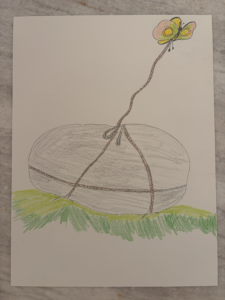
One participant represented her experiences through the image of a butterfly attempting to lift a large rock:
“Pues esto de aquí es una mariposa, una mariposa intentando elevar una piedra, una roca en sí, porque yo creo que la migración tiene un poquito que ver con esto, que muchas veces cuando venimos nos encontramos con algo nuevo y queremos levantarlo absolutamente todo y no paramos a pensar que pesa. [So, this here is a butterfly, a butterfly trying to lift a stone, a rock in itself, because I think migration has a little to do with this, that many times when we come we find something new and we want to lift absolutely everything and we don’t stop to think that it weighs.]”
For the participant, the delicate butterfly carries something disproportionately heavy. The image became a way of talking about the expectation that migrants reconstruct almost every part of their lives after arrival while also carrying what has been left behind. Later, the participant described this loss in sensory terms:
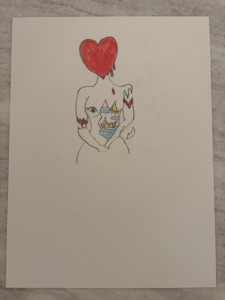
“Este cuerpo está un poquito roto porque las personas que migramos pues dejamos muchas cosas, dejamos a la familia, dejamos el olor de la comida, de la lluvia, dejamos la fi
esta, no podemos estar ahí para enterrar a nuestros muertos. [This body is a little broken because we migrants leave many things behind, we leave our families, we leave the smell of food, of rain, we leave the parties, we can’t be there to bury our dead.]”
Another participant depicted their migration from Peru as a river that is still being navigated:
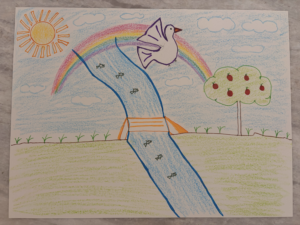
“Este dibujo representa mi camino como migrante en España viniendo desde Perú. El río es ese viaje largo sin uso, a veces turbulento, pero que he aprendido a navegarlo y que a día de hoy sigo navegando. [This drawing represents my journey as a migrant in Spain, coming from Peru. The river is that long, unused, sometimes turbulent journey, but one I’ve learned to navigate and continue to navigate to this day.]”
At the centre of the drawing is a bridge. It is not presented as something already waiting for the migrant, but as something constructed through the process of migration itself:
“Este puente es aquel puente que también he ido yo forjando en base a trámites, es un puente construido con esfuerzo, un puente construido con miedos, con alegrías, con tristezas, y es un puente que lo he ido yo forjando y haciendo en base a esfuerzo, trámites, documentación y cosas así.
[This bridge is one that I have also been forging based on procedures, it is a bridge built with effort, a bridge built with fears, with joys, with sadness, and it is a bridge that I have been forging and making based on effort, procedures, documentation and things like that.]”
The drawing brings together bureaucracy and emotion. Papers, administrative procedures and legal status are inseparable from fear, sadness, hope and the effort of creating a new life. The participant also drew a bird that remains in flight, explaining that it represents both freedom and a journey that has not yet completely ended.
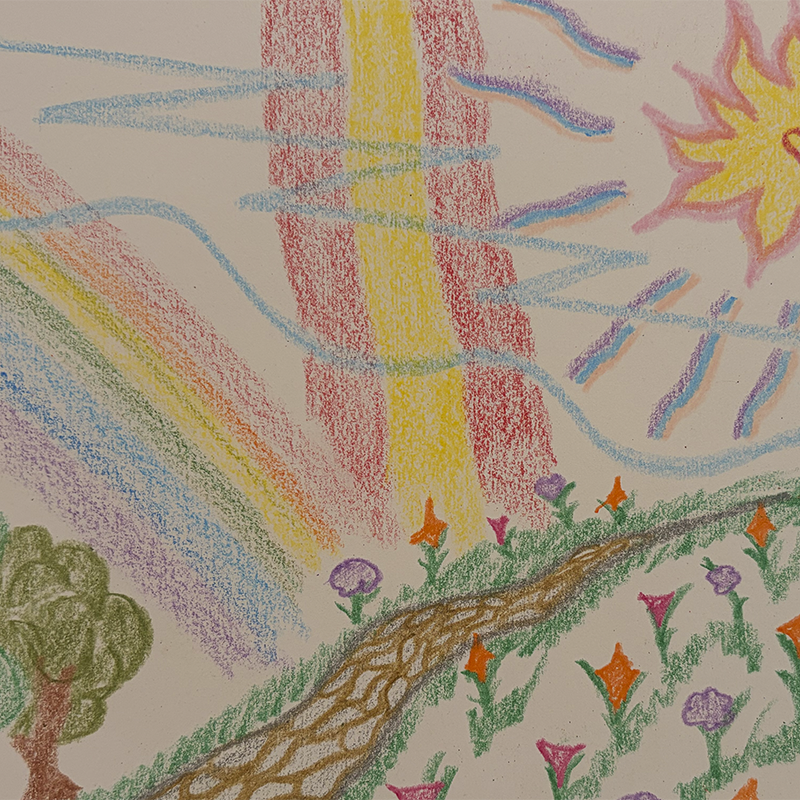
In another drawing, nature becomes a language for describing freedom and personal growth. The participant explained each of its elements:
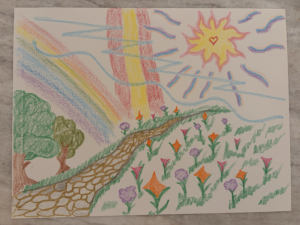
“El arcoíris es el símbolo de la comunidad LGBT. La bandera de España representa a este país. Este es el sol, que soy yo. Las líneas azules son el viento de la libertad. Todo son símbolos. Las flores son mi amor. La naturaleza es el crecimiento. Me gusta la naturaleza. Aquí es como voy floreciendo, y el camino de piedras son las dificultades que encuentro en mi camino en este país, y estoy segura de que podré superarlas. [The rainbow is the symbol of the LGBT community. The flag of Spain represents this country. This is the sun, which is me. The blue lines are the wind of freedom. Everything is symbolic. The flowers are my love. Nature is growth. I love nature. This is how I am blossoming, and the stone path represents the difficulties I encounter on my journey in this country, and I am confident that I will overcome them.]”
The image does not erase difficulty. The path remains made of stones, but those obstacles exist alongside the rainbow, flowers, sunlight and what the participant calls “el viento de la libertad”. The drawing holds vulnerability and optimism together rather than presenting migration as either wholly traumatic or wholly liberating.
Another participant drew a Spanish flag, a rainbow and one of Madrid’s most recognisable landmarks.During the discussion, the participant explained why Puerta del Sol occupied such an important place in the picture:
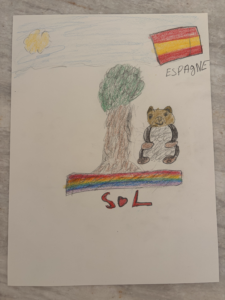
“Porque es el primer lugar que visité en Madrid. La Puerta del Sol. Cuando llegué y salí, lo primero que vi fue la Puerta del Sol y saqué muchas fotos ahí. [Because it’s the first place I visited in Madrid. Puerta del Sol. When I arrived and went outside, the first thing I saw was Puerta del Sol, and I took lots of pictures there.]”
Elsewhere in their account, the participant connected Spain with the possibility of living an LGBTIQ+ relationship more openly:
“Cuando visité España, vi que era un buen país comparado con los otros que había visitado, que me trató bien, y encontré la libertad para vivir en una relación LGBT con otra mujer y para tener una relación como yo quería. [When I visited Spain, I saw that it was a good country compared to the others I had visited, that it treated me well, and I found the freedom to live in an LGBT relationship with another woman and to have a relationship the way I wanted.]”
Here, a familiar Madrid landmark takes on a more personal meaning that is now part of the participant’s memory of arrival and of imagining a different kind of life.
Creative methods as a way of listening differently
These first drawings demonstrate why creative and participatory methods form an important part of GLASO’s research.
Across the workshop, forced migration was represented as a river, a bridge, a stone, a butterfly, a bird, flowers, sunlight and familiar urban landmarks. These images allowed participants to determine which aspects of their experiences mattered and how they wanted to communicate them.
They also resist a simple story about LGBTIQ+ migration to Europe. Spain can represent freedom and possibility while simultaneously containing new barriers. Arrival does not necessarily mean the end of displacement, and legal protection does not automatically resolve questions of belonging, discrimination or loss.
Over the coming months, GLASO will continue its creative workshops alongside interviews and other participatory research in Spain. Together, these different forms of knowledge will help us understand how asylum and migration systems operate on paper as well as how they are experienced and reimagined by the people who move through them.
En nuestro primer taller en Madrid utilizamos el dibujo como una forma de pensar y hablar sobre estos procesos. Invitamos a las personas LGBTIQ+ participantes a representar mediante un dibujo algún aspecto de sus experiencias y, posteriormente, si así lo deseaban, explicar al grupo los significados y emociones contenidos en sus dibujos.
El ejercicio produjo relatos muy distintos sobre lo que significa atravesar fronteras y reconstruir una vida en otro lugar. Las personas participantes hablaron de libertad y seguridad, pero también de burocracia, racismo, transfobia, pérdidas, incertidumbre, separación familiar y del trabajo emocional que supone empezar de nuevo.
En estos talleres, la práctica creativa constituye en sí misma una forma de producir conocimiento. Lo que una persona decide dibujar y la manera en que explica posteriormente su obra pueden hacer visibles dimensiones del desplazamiento que no siempre aparecen mediante métodos de investigación más convencionales.
Una de las participantes representó la migración mediante una mariposa que intenta levantar una enorme piedra:
“Pues esto de aquí es una mariposa, una mariposa intentando elevar una piedra, una roca en si, porque yo creo que la migración tiene un poquito que ver con esto, que muchas veces cuando venimos nos encontramos con algo nuevo y queremos levantarlo absolutamente todo y no paramos a pensar que pesa.”
La imagen representa el enorme peso que puede acompañar al proceso de reconstruir una vida después de migrar. La aparente fragilidad de la mariposa contrasta con aquello que intenta levantar.
La participante vinculó posteriormente esa carga con todo aquello que permanece en el lugar del que se ha partido:
“Este cuerpo está un poquito roto porque las personas que migramos pues dejamos muchas cosas, dejamos a la familia, dejamos el olor de la comida, de la lluvia, dejamos la fiesta, no podemos estar ahí para enterrar a nuestros muertos.“
Otra persona participante representó su trayectoria migratoria desde Perú a través de un río que todavía continúa navegando:
“Este dibujo representa mi camino como migrante en España viniendo desde Perú. El río es ese viaje largo sin uso, a veces turbulento, pero que he aprendido a navegarlo y que a día de hoy sigo navegando.“
En el centro de la imagen aparece un puente, que no estaba ya construido esperando a ser atravesado sino que el participante ha tenido que construir él mismo durante el proceso migratorio:
“Este puente es aquel puente que también he ido yo forjando en base a trámites, es un puente construido con esfuerzo, un puente construido con miedos, con alegrías, con tristezas, y es un puente que lo he ido yo forjando y haciendo en base a esfuerzo, trámites, documentación y cosas así.”
El dibujo conecta así dimensiones administrativas y emocionales de la migración. Los trámites y el estatus migratorio aparecen inseparablemente ligados al miedo, la tristeza, la alegría y el esfuerzo necesario para construir una nueva vida. El pájaro que aparece en la imagen representa, además, una libertad que todavía está en movimiento: un vuelo que continúa y que todavía no ha aterrizado completamente.
En otro de los dibujos, la naturaleza se convierte en un lenguaje para hablar simultáneamente de libertad y crecimiento. La participante explicó los distintos elementos de su dibujo:
“El arcoíris es el símbolo de la comunidad LGBT. La bandera de España representa a este país. Este es el sol, que soy yo. Las líneas azules son el viento de la libertad. Todo son símbolos. Las flores son mi amor. La naturaleza es el crecimiento. Me gusta la naturaleza. Aquí es como voy floreciendo, y el camino de piedras son las dificultades que encuentro en mi camino en este país, y estoy segura de que podré superarlas.“
Las dificultades no desaparecen de la imagen. El camino continúa estando hecho de piedras, pero junto a ellas aparecen las flores, el sol, el arcoíris y aquello que la propia participante denomina “el viento de la libertad”.
El dibujo permite que la vulnerabilidad y la esperanza existan al mismo tiempo, sin presentar la migración exclusivamente como una historia de sufrimiento ni como una narrativa sencilla de liberación.
Otra participante dibujó la bandera española, un arcoíris y uno de los lugares más reconocibles de Madrid. Al preguntarle específicamente por qué había representado la Puerta del Sol, explicó:
“Porque es el primer lugar que visité en Madrid. La Puerta del Sol. Cuando llegué y salí, lo primero que vi fue la Puerta del Sol y saqué muchas fotos ahí.“
En su relato, la participante también relacionó su experiencia en España con la posibilidad de vivir su relación de forma más abierta:
“Cuando visité España, vi que era un buen país comparado con los otros que había visitado, que me trató bien, y encontré la libertad para vivir en una relación LGBT con otra mujer y para tener una relación como yo quería.“
Para esta participante, Puerta del Sol deja de ser únicamente un espacio emblemático o turístico de Madrid para convertirse en un recuerdo personal de llegada y en parte de la construcción de una nueva relación con la ciudad y con la posibilidad de vivir de otra manera.
Los métodos creativos como otra forma de escuchar
Estos primeros dibujos muestran por qué los métodos creativos y participativos son una parte importante de la investigación de GLASO. Durante el taller, la migración forzosa apareció representada como un río, un puente, una piedra, una mariposa, un pájaro, flores, luz y lugares concretos de la ciudad. Estas imágenes permitieron que fueran las propias personas participantes quienes decidieran qué elementos de sus experiencias eran importantes y cómo querían comunicarlos.
También cuestionan cualquier relato sencillo sobre el desplazamiento forzado LGBTIQ+ hacia Europa. España puede representar libertad y nuevas posibilidades y, al mismo tiempo, generar nuevos obstáculos. Llegar a otro país no significa necesariamente que termine el desplazamiento, del mismo modo que la protección legal no resuelve automáticamente cuestiones relacionadas con la pertenencia, la discriminación, la precariedad o la pérdida.
Durante los próximos meses, GLASO continuará desarrollando talleres creativos junto con entrevistas y otras formas de investigación participativa en España. La combinación de estos métodos nos permitirá comprender no solo cómo funcionan las políticas y los sistemas de asilo sobre el papel, sino también cómo son vividos y reinterpretados por las personas que tienen que atravesarlos.
Our first workshop in Madrid used drawing as a way of thinking and talking about forced displacement. Participants were invited to create an image representing their experiences and then, if they wished, explain the meanings behind it.
The exercise produced very different accounts of what it means to move across borders and rebuild a life elsewhere. Participants spoke about freedom and safety, but also bureaucracy, racism, transphobia, loss, uncertainty, family separation and the emotional work involved in beginning again. The drawings made it possible to communicate these experiences through metaphors before translating them into words.
The workshops approach creative practice as a form of knowledge production. What people draw and the explanations they give us can reveal dimensions of displacement that conventional interviews do not always make visible.
One participant represented her experiences through the image of a butterfly attempting to lift a large rock:
“Pues esto de aquí es una mariposa, una mariposa intentando elevar una piedra, una roca en sí, porque yo creo que la migración tiene un poquito que ver con esto, que muchas veces cuando venimos nos encontramos con algo nuevo y queremos levantarlo absolutamente todo y no paramos a pensar que pesa. [So, this here is a butterfly, a butterfly trying to lift a stone, a rock in itself, because I think migration has a little to do with this, that many times when we come we find something new and we want to lift absolutely everything and we don’t stop to think that it weighs.]”
For the participant, the delicate butterfly carries something disproportionately heavy. The image became a way of talking about the expectation that migrants reconstruct almost every part of their lives after arrival while also carrying what has been left behind. Later, the participant described this loss in sensory terms:
“Este cuerpo está un poquito roto porque las personas que migramos pues dejamos muchas cosas, dejamos a la familia, dejamos el olor de la comida, de la lluvia, dejamos la fiesta, no podemos estar ahí para enterrar a nuestros muertos. [This body is a little broken because we migrants leave many things behind, we leave our families, we leave the smell of food, of rain, we leave the parties, we can’t be there to bury our dead.]”
Another participant depicted their migration from Peru as a river that is still being navigated:
“Este dibujo representa mi camino como migrante en España viniendo desde Perú. El río es ese viaje largo sin uso, a veces turbulento, pero que he aprendido a navegarlo y que a día de hoy sigo navegando. [This drawing represents my journey as a migrant in Spain, coming from Peru. The river is that long, unused, sometimes turbulent journey, but one I’ve learned to navigate and continue to navigate to this day.]”
At the centre of the drawing is a bridge. It is not presented as something already waiting for the migrant, but as something constructed through the process of migration itself:
“Este puente es aquel puente que también he ido yo forjando en base a trámites, es un puente construido con esfuerzo, un puente construido con miedos, con alegrías, con tristezas, y es un puente que lo he ido yo forjando y haciendo en base a esfuerzo, trámites, documentación y cosas así.
[This bridge is one that I have also been forging based on procedures, it is a bridge built with effort, a bridge built with fears, with joys, with sadness, and it is a bridge that I have been forging and making based on effort, procedures, documentation and things like that.]”
The drawing brings together bureaucracy and emotion. Papers, administrative procedures and legal status are inseparable from fear, sadness, hope and the effort of creating a new life. The participant also drew a bird that remains in flight, explaining that it represents both freedom and a journey that has not yet completely ended.
In another drawing, nature becomes a language for describing freedom and personal growth. The participant explained each of its elements:
“El arcoíris es el símbolo de la comunidad LGBT. La bandera de España representa a este país. Este es el sol, que soy yo. Las líneas azules son el viento de la libertad. Todo son símbolos. Las flores son mi amor. La naturaleza es el crecimiento. Me gusta la naturaleza. Aquí es como voy floreciendo, y el camino de piedras son las dificultades que encuentro en mi camino en este país, y estoy segura de que podré superarlas. [The rainbow is the symbol of the LGBT community. The flag of Spain represents this country. This is the sun, which is me. The blue lines are the wind of freedom. Everything is symbolic. The flowers are my love. Nature is growth. I love nature. This is how I am blossoming, and the stone path represents the difficulties I encounter on my journey in this country, and I am confident that I will overcome them.]”
The image does not erase difficulty. The path remains made of stones, but those obstacles exist alongside the rainbow, flowers, sunlight and what the participant calls “el viento de la libertad”. The drawing holds vulnerability and optimism together rather than presenting migration as either wholly traumatic or wholly liberating.
Another participant drew a Spanish flag, a rainbow and one of Madrid’s most recognisable landmarks.During the discussion, the participant explained why Puerta del Sol occupied such an important place in the picture:
“Porque es el primer lugar que visité en Madrid. La Puerta del Sol. Cuando llegué y salí, lo primero que vi fue la Puerta del Sol y saqué muchas fotos ahí. [Because it’s the first place I visited in Madrid. Puerta del Sol. When I arrived and went outside, the first thing I saw was Puerta del Sol, and I took lots of pictures there.]”
Elsewhere in their account, the participant connected Spain with the possibility of living an LGBTIQ+ relationship more openly:
“Cuando visité España, vi que era un buen país comparado con los otros que había visitado, que me trató bien, y encontré la libertad para vivir en una relación LGBT con otra mujer y para tener una relación como yo quería. [When I visited Spain, I saw that it was a good country compared to the others I had visited, that it treated me well, and I found the freedom to live in an LGBT relationship with another woman and to have a relationship the way I wanted.]”
Here, a familiar Madrid landmark takes on a more personal meaning that is now part of the participant’s memory of arrival and of imagining a different kind of life.
These first drawings demonstrate why creative and participatory methods form an important part of GLASO’s research.
Across the workshop, forced migration was represented as a river, a bridge, a stone, a butterfly, a bird, flowers, sunlight and familiar urban landmarks. These images allowed participants to determine which aspects of their experiences mattered and how they wanted to communicate them.
They also resist a simple story about LGBTIQ+ migration to Europe. Spain can represent freedom and possibility while simultaneously containing new barriers. Arrival does not necessarily mean the end of displacement, and legal protection does not automatically resolve questions of belonging, discrimination or loss.
Over the coming months, GLASO will continue its creative workshops alongside interviews and other participatory research in Spain. Together, these different forms of knowledge will help us understand how asylum and migration systems operate on paper as well as how they are experienced and reimagined by the people who move through them.
En nuestro primer taller en Madrid utilizamos el dibujo como una forma de pensar y hablar sobre estos procesos. Invitamos a las personas LGBTIQ+ participantes a representar mediante un dibujo algún aspecto de sus experiencias y, posteriormente, si así lo deseaban, explicar al grupo los significados y emociones contenidos en sus dibujos.
El ejercicio produjo relatos muy distintos sobre lo que significa atravesar fronteras y reconstruir una vida en otro lugar. Las personas participantes hablaron de libertad y seguridad, pero también de burocracia, racismo, transfobia, pérdidas, incertidumbre, separación familiar y del trabajo emocional que supone empezar de nuevo.
En estos talleres, la práctica creativa constituye en sí misma una forma de producir conocimiento. Lo que una persona decide dibujar y la manera en que explica posteriormente su obra pueden hacer visibles dimensiones del desplazamiento que no siempre aparecen mediante métodos de investigación más convencionales.
Una de las participantes representó la migración mediante una mariposa que intenta levantar una enorme piedra:
“Pues esto de aquí es una mariposa, una mariposa intentando elevar una piedra, una roca en si, porque yo creo que la migración tiene un poquito que ver con esto, que muchas veces cuando venimos nos encontramos con algo nuevo y queremos levantarlo absolutamente todo y no paramos a pensar que pesa.”
La imagen representa el enorme peso que puede acompañar al proceso de reconstruir una vida después de migrar. La aparente fragilidad de la mariposa contrasta con aquello que intenta levantar.
La participante vinculó posteriormente esa carga con todo aquello que permanece en el lugar del que se ha partido:
“Este cuerpo está un poquito roto porque las personas que migramos pues dejamos muchas cosas, dejamos a la familia, dejamos el olor de la comida, de la lluvia, dejamos la fiesta, no podemos estar ahí para enterrar a nuestros muertos.“
Otra persona participante representó su trayectoria migratoria desde Perú a través de un río que todavía continúa navegando:
“Este dibujo representa mi camino como migrante en España viniendo desde Perú. El río es ese viaje largo sin uso, a veces turbulento, pero que he aprendido a navegarlo y que a día de hoy sigo navegando.“
En el centro de la imagen aparece un puente, que no estaba ya construido esperando a ser atravesado sino que el participante ha tenido que construir él mismo durante el proceso migratorio:
“Este puente es aquel puente que también he ido yo forjando en base a trámites, es un puente construido con esfuerzo, un puente construido con miedos, con alegrías, con tristezas, y es un puente que lo he ido yo forjando y haciendo en base a esfuerzo, trámites, documentación y cosas así.
El dibujo conecta así dimensiones administrativas y emocionales de la migración. Los trámites y el estatus migratorio aparecen inseparablemente ligados al miedo, la tristeza, la alegría y el esfuerzo necesario para construir una nueva vida.
El pájaro que aparece en la imagen representa, además, una libertad que todavía está en movimiento: un vuelo que continúa y que todavía no ha aterrizado completamente.
En otro de los dibujos, la naturaleza se convierte en un lenguaje para hablar simultáneamente de libertad y crecimiento. La participante explicó los distintos elementos de su dibujo:
“El arcoíris es el símbolo de la comunidad LGBT. La bandera de España representa a este país. Este es el sol, que soy yo. Las líneas azules son el viento de la libertad. Todo son símbolos. Las flores son mi amor. La naturaleza es el crecimiento. Me gusta la naturaleza. Aquí es como voy floreciendo, y el camino de piedras son las dificultades que encuentro en mi camino en este país, y estoy segura de que podré superarlas.“
Las dificultades no desaparecen de la imagen. El camino continúa estando hecho de piedras, pero junto a ellas aparecen las flores, el sol, el arcoíris y aquello que la propia participante denomina “el viento de la libertad”.
El dibujo permite que la vulnerabilidad y la esperanza existan al mismo tiempo, sin presentar la migración exclusivamente como una historia de sufrimiento ni como una narrativa sencilla de liberación.
Otra participante dibujó la bandera española, un arcoíris y uno de los lugares más reconocibles de Madrid. Al preguntarle específicamente por qué había representado la Puerta del Sol, explicó:
“Porque es el primer lugar que visité en Madrid. La Puerta del Sol. Cuando llegué y salí, lo primero que vi fue la Puerta del Sol y saqué muchas fotos ahí.“
En su relato, la participante también relacionó su experiencia en España con la posibilidad de vivir su relación de forma más abierta:
“Cuando visité España, vi que era un buen país comparado con los otros que había visitado, que me trató bien, y encontré la libertad para vivir en una relación LGBT con otra mujer y para tener una relación como yo quería.“
Para esta participante, Puerta del Sol deja de ser únicamente un espacio emblemático o turístico de Madrid para convertirse en un recuerdo personal de llegada y en parte de la construcción de una nueva relación con la ciudad y con la posibilidad de vivir de otra manera.
Estos primeros dibujos muestran por qué los métodos creativos y participativos son una parte importante de la investigación de GLASO. Durante el taller, la migración forzosa apareció representada como un río, un puente, una piedra, una mariposa, un pájaro, flores, luz y lugares concretos de la ciudad. Estas imágenes permitieron que fueran las propias personas participantes quienes decidieran qué elementos de sus experiencias eran importantes y cómo querían comunicarlos.
También cuestionan cualquier relato sencillo sobre el desplazamiento forzado LGBTIQ+ hacia Europa. España puede representar libertad y nuevas posibilidades y, al mismo tiempo, generar nuevos obstáculos. Llegar a otro país no significa necesariamente que termine el desplazamiento, del mismo modo que la protección legal no resuelve automáticamente cuestiones relacionadas con la pertenencia, la discriminación, la precariedad o la pérdida.
Durante los próximos meses, GLASO continuará desarrollando talleres creativos junto con entrevistas y otras formas de investigación participativa en España. La combinación de estos métodos nos permitirá comprender no solo cómo funcionan las políticas y los sistemas de asilo sobre el papel, sino también cómo son vividos y reinterpretados por las personas que tienen que atravesarlos.