
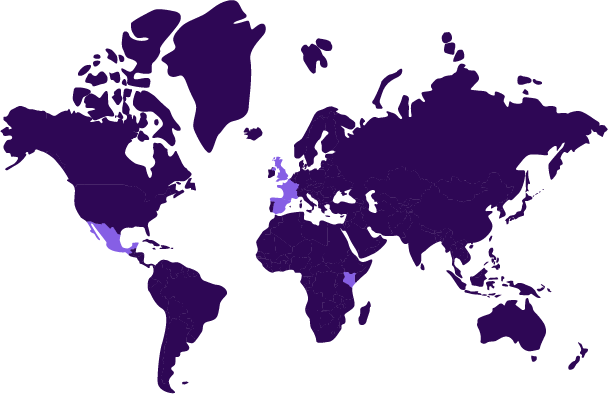
The project focuses on six core country sites: the UK, Spain, France, Mexico, Lebanon, and Kenya. These are connected through three comparative pairings: Mexico-Spain, UK-Kenya, and France-Lebanon
These pairings are grounded in the project’s wider interest in colonial and postcolonial entanglements
They make it possible to analyse how historical power relations continue to shape present-day asylum systems, migration routes, humanitarian infrastructures, and protection regimes
The UK is a core case study for the project and serves as a key site for identifying systemic gaps in asylum policy and practice. It is also the starting point for examining how state data collection, credibility assessments, accommodation systems and broader bordering practices affect LGBTIQ+ people seeking asylum.
Spain is one of the project’s European focal points and is examined in relation to migration routes, legal recognition, and wider policy debates within Europe. It is also part of the Mexico-Spain pairing, which allows the project to explore how colonial legacies, language, and transnational ties shape migration governance across Latin America and Europe.
France is the third European focal point and is studied as a strategically important site within current migration debates. The France-Lebanon pairing enables the project to explore the afterlives of empire, Francophone institutional connections, and uneven geographies of protection in relation to LGBTIQ+ asylum.
Mexico is a key site for understanding asylum and migration dynamics across Latin America, including both South-to-North and South-to-South routes. The project approaches Mexico as central to broader regional debates on displacement, mobility, border governance, and protection.
Lebanon offers a critical lens into asylum in politically complex and resource-constrained settings in the SWANA region. The project uses this site to examine how displacement, humanitarianism and protection are shaped by local conditions and wider geopolitical structures.
Kenya is studied as a major refugee-hosting state in Africa and an important site for understanding South-to-South asylum experiences. The UK-Kenya pairing helps illuminate the ongoing effects of British colonial and Commonwealth-linked legal and administrative structures on present-day systems of protection and exclusion.